
Competitor Comparison
Logseq vs Capacities
 Logseq
 Capacities
Comparing Logseq and Capacities technical specifications. Every Logseq and Capacities spec is footnoted. Compare with Oyma vs Logseq and Oyma vs Capacities on macOS.
choose logseq if
- You prioritize free and open source with an active community (45k+ github stars).
- You value local execution and logseq og: local markdown files (maintenance only). logseq 2.0 (beta since 2026-07-13): local sqlite database graphs, markdown export.
- You prefer Logseq's operational architecture over Capacities's model.
choose capacities if
- You prioritize object-based knowledge model with typed objects, properties and views.
- You value cloud execution and proprietary object database in the capacities cloud with offline support.
- You prefer Capacities's operational architecture over Logseq's model.
At a glance
| Feature | Logseq | Capacities |
|---|---|---|
| Where it runs | Logseq: On your device(Logseq where it runs source) | Capacities: In the cloud(Capacities where it runs source) |
| Storage format | Logseq: Logseq OG: local Markdown files (maintenance only). Logseq 2.0 (beta since 2026-07-13): local SQLite database graphs, Markdown export(Logseq storage format source) | Capacities: Proprietary object database in the Capacities cloud with offline support; Markdown export(Capacities storage format source) |
| Plain Markdown files | Logseq: Yes(Logseq plain markdown files source)True for Logseq OG, the file-based version, which now gets security fixes and dependency upgrades only. The 2.0 "DB version" stores a SQLite database. | Capacities: No(Capacities plain markdown files source) |
| Meeting recording | Logseq: No meeting recording(Logseq meeting recording source) | Capacities: Records without a bot(Capacities meeting recording source)Audio recording can optionally include system audio on macOS; Windows and mobile record the mic only. Currently Believer early access, Pro to follow. |
| On-device transcription | Logseq: No(Logseq on-device transcription source) | Capacities: No(Capacities on-device transcription source)Transcripts and summaries go to a cloud AI provider and use the AI budget. |
| AI integration | Logseq: None first-party(Logseq ai integration source)unverified: no AI feature mentioned on official pages. | Capacities: Chat with notes, media analysis, autofill and assistant on a monthly AI budget(Capacities ai integration source) |
| Works offline | Logseq: Yes(Logseq works offline source) | Capacities: Yes(Capacities works offline source) |
| Wikilinks & backlinks | Logseq: Yes(Logseq wikilinks & backlinks source) | Capacities: Yes(Capacities wikilinks & backlinks source)"@" or "[[]]" both create links to objects. |
| Plugins / integrations | Logseq: Plugin marketplace and themes; open source (AGPL)(Logseq plugins / integrations source) | Capacities: Integrations (e.g. email-in), API(Capacities plugins / integrations source)unverified: scope not re-checked. |
| Mobile apps | Logseq: Yes(Logseq mobile apps source) | Capacities: Yes(Capacities mobile apps source) |
| Platforms | Logseq: macOS, Windows, Linux, Android, iOS(Logseq platforms source)New iOS app ships with 2.0 (secondary source). | Capacities: macOS, Windows, Linux, iOS, Android, Web(Capacities platforms source) |
| Free plan | Logseq: Free and open source (AGPL)(Logseq free plan source) | Capacities: Basic: free, 5 GB media(Capacities free plan source) |
| Paid plans from | Logseq: None(Logseq paid plans from source) | Capacities: Pro: $9.99/month billed yearly ($119.88/yr), $11.99 monthly(Capacities paid plans from source) |
Logseq facts last verified 2026-10-03. Capacities facts last verified 2026-10-03.
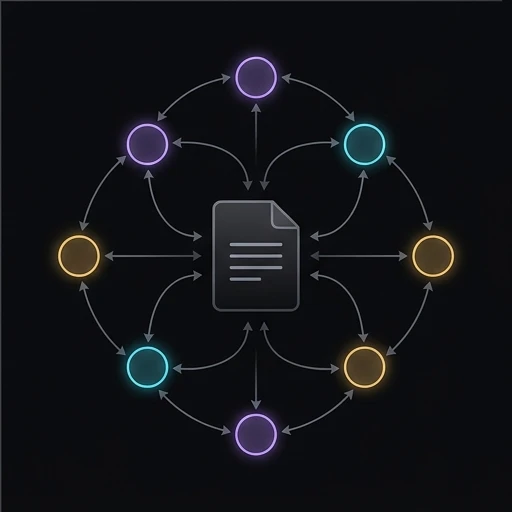
Execution Model: Logseq vs Capacities
Reviewing Logseq alongside Capacities demonstrates fundamental product differences. While Logseq and Capacities target personal and team productivity, their architectures address distinct priorities. Examining Logseq against Capacities exposes operational distinctions. Between Logseq and Capacities, storage and compute boundaries govern performance. Testing Logseq alongside Capacities checks process stability under load. Contrasting Logseq with Capacities ensures informed tooling selection. Selecting Logseq or Capacities ensures optimal team efficiency.
Regarding system execution, Logseq runs local, whereas Capacities executes cloud. Comparing Logseq alongside Capacities highlights hardware utilization across local devices. While Logseq targets macOS, Windows, Capacities supports macOS, Windows. Evaluating Logseq against Capacities clarifies day-to-day compute footprints. Between Logseq and Capacities, background task handling dictates app smoothness. Testing Logseq with Capacities ensures predictable application latency. Choosing Logseq or Capacities matches team infrastructure.
Across active projects, Logseq organizes work via A privacy-first, open-source knowledge base, while Capacities structures data via A home for everything you think, learn, and create. Between Logseq and Capacities, design philosophies dictate organizational clarity. Reviewing Logseq alongside Capacities avoids unnecessary software changes. Comparing Logseq with Capacities ensures smooth collaboration. Testing Logseq against Capacities verifies editing comfort. Choosing Logseq or Capacities optimizes project tracking.
Storage Durability and File Access: Logseq vs Capacities
File persistence creates clear boundaries between Logseq and Capacities. In Logseq, documents are structured as Logseq OG: local Markdown files (maintenance only). Logseq 2.0 (beta since 2026-07-13): local SQLite database graphs, Markdown export, whereas Capacities formats entries as Proprietary object database in the Capacities cloud with offline support. Because Logseq incorporates plain Markdown files while Capacities applies internal databases, both tools enforce distinct custody models. Between Logseq and Capacities, local folder structures prevent data lock-in. Evaluating Logseq with Capacities guarantees transparent file migration. Contrasting Logseq against Capacities clarifies storage overhead. Deciding on Logseq or Capacities governs your archival safety.
Filesystem transparency in Logseq versus Capacities shapes external script integration. Where Logseq exposes records through Logseq OG: local Markdown files (maintenance only). Logseq 2.0 (beta since 2026-07-13): local SQLite database graphs, Markdown export, Capacities handles data inside Proprietary object database in the Capacities cloud with offline support. Testing Logseq alongside Capacities unlocks automated shell scripting. Deciding between Logseq and Capacities prevents database corruption risks. Evaluating Logseq with Capacities confirms snapshot reliability. Comparing Logseq against Capacities protects historical information.
Long-term archival guarantees distinguish Logseq from Capacities for serious researchers. With Logseq storing Logseq OG: local Markdown files (maintenance only). Logseq 2.0 (beta since 2026-07-13): local SQLite database graphs, Markdown export and Capacities storing Proprietary object database in the Capacities cloud with offline support, data sovereignty varies dramatically. Assessing Logseq against Capacities prevents accidental document loss. Weighing Logseq alongside Capacities clarifies disk encryption options. Choosing Logseq or Capacities protects multi-year intellectual capital.
Document Organization: Logseq vs Capacities
Note-linking mechanics separate Logseq from Capacities across extensive knowledge repositories. When linking complex thoughts, Logseq behaves differently than Capacities. If Logseq encourages flexible backlinks, Capacities emphasizes clean nested documents. Opting for Logseq instead of Capacities guides information synthesis. Reviewing Logseq alongside Capacities validates cataloging depth. Contrasting Logseq with Capacities accelerates reference retrieval. Choosing Logseq or Capacities optimizes long-term writing.
Index management contrasts Logseq with Capacities across large document sets. For reference filing, Logseq and Capacities implement separate lookup algorithms. Deciding between Logseq and Capacities prevents fragmented thinking. Comparing Logseq with Capacities shows outline clarity. Reviewing Logseq alongside Capacities accelerates project documentation. Weighing Logseq against Capacities supports rigorous research.
Spontaneous drafting ergonomics separate Logseq from Capacities in meeting contexts. In live note taking, Logseq emphasizes A privacy-first, open-source knowledge base, whereas Capacities emphasizes A home for everything you think, learn, and create. Testing Logseq alongside Capacities reveals navigation agility. Contrasting Logseq with Capacities confirms modal command speed. Deciding between Logseq and Capacities guarantees smooth note entry.
Offline Reliability and Network Independence: Logseq vs Capacities
Disconnected usability divides Logseq from Capacities for field practitioners. When internet connections drop, Logseq and Capacities react through contrasting error handling logic. While editing without web access, Logseq diverges from Capacities in preserving changes on disk. Evaluating Logseq against Capacities confirms complete document availability. Between Logseq and Capacities, local database caches dictate offline stability. Contrasting Logseq alongside Capacities guarantees seamless disconnected work. Choosing Logseq or Capacities ensures uninterrupted drafting.
Transit editing reliability sets Logseq apart from Capacities during patchy connectivity. In train transit, Logseq and Capacities queue file updates through divergent internal mechanisms. Deciding between Logseq and Capacities eliminates lost paragraph edits. Comparing Logseq alongside Capacities clarifies local search indexes. Reviewing Logseq with Capacities protects mobile knowledge workers. Weighing Logseq against Capacities maintains continuous document access.
Network-free indexing sets Logseq apart from Capacities for traveling researchers. While Logseq queries records without server queries, Capacities coordinates lookups through alternative channels. Assessing Logseq against Capacities prevents stalled reference lookups. Comparing Logseq with Capacities ensures reliable note retrieval. Choosing Logseq or Capacities delivers dependable offline productivity.
Device Compatibility and Ecosystem: Logseq vs Capacities
Device ecosystem reach separates Logseq from Capacities across enterprise fleets. While Logseq serves users on macOS, Windows, Capacities addresses teams on macOS, Windows. As Logseq separates from Capacities, systems engineers assess client package maintenance. Reviewing Logseq alongside Capacities validates operating system parity. Between Logseq and Capacities, platform implementations dictate interface polish. Evaluating Logseq against Capacities prevents hardware mismatches. Choosing Logseq or Capacities accommodates multi-platform staff.
System resource footprint in Logseq versus Capacities affects battery longevity. On laptop hardware, Logseq and Capacities utilize divergent background services. Selecting between Logseq and Capacities eliminates compatibility headaches. Contrasting Logseq with Capacities explains tablet companion capabilities. Assessing Logseq against Capacities guarantees stable operating conditions. Testing Logseq alongside Capacities preserves laptop battery life.
Toolchain extensibility separates Logseq from Capacities across connected developer environments. Whereas Logseq connects with scripts on macOS, Windows, Capacities manages integrations throughout macOS, Windows. Reviewing Logseq against Capacities verifies workflow compatibility. Benchmarking Logseq alongside Capacities eliminates cross-device synchronization latency. Selecting between Logseq and Capacities finalizes your ecosystem plan.
Flagship Features: Logseq vs Capacities
Flagship feature sets separate Logseq from Capacities in everyday production environments. When evaluating execution, Logseq delivers Free and open source with an active community (45k+ GitHub stars), while Capacities delivers Object-based knowledge model with typed objects, properties and views. Assessing Logseq alongside Capacities matches features to project demands. Between Logseq and Capacities, key operational strengths define software satisfaction. Contrasting Logseq against Capacities demonstrates distinct advantages. Deciding on Logseq or Capacities elevates team performance.
Core user advantages divide Logseq from Capacities across knowledge-heavy disciplines. In information synthesis, Logseq and Capacities provide different cognitive aids. Deciding between Logseq and Capacities refines research methodology. Comparing Logseq with Capacities validates user interface ergonomics. Reviewing Logseq alongside Capacities prevents workspace clutter. Weighing Logseq against Capacities guarantees productive daily workflows.
Workspace scalability highlights key differences between Logseq and Capacities across organizational archives. In deep relational structures, Logseq and Capacities manage index caches with differing memory footprints. Reviewing Logseq alongside Capacities assures snappy UI navigation. Comparing Logseq against Capacities demonstrates sustained search stability. Choosing Logseq or Capacities maintains high operational throughput.
Known Trade-Offs: Logseq vs Capacities
Engineering limitations create practical boundaries between Logseq and Capacities. For Logseq, verified constraints highlight The Markdown-file version (Logseq OG) is maintenance-only; new features go to the SQLite-based 2.0, while Capacities documents Meeting recording is early access on the Believer tier (from $12.49/month) and uses cloud transcription metered by an AI budget. Comparing Logseq alongside Capacities prepares teams for real-world tradeoffs. Between Logseq and Capacities, architectural boundaries impact custom extensions. Testing Logseq against Capacities confirms practical edge cases. Contrasting Logseq with Capacities avoids unexpected operational stalls. Choosing Logseq or Capacities guarantees realistic adoption plans.
Architectural tradeoffs distinguish Logseq from Capacities as document collections expand. Under large repositories, Logseq and Capacities face separate performance limits. Choosing between Logseq and Capacities lowers administrative overhead. Contrasting Logseq with Capacities clarifies backup intricacies. Assessing Logseq against Capacities prevents workflow friction. Testing Logseq alongside Capacities ensures sustained software stability.
Upkeep requirements contrast Logseq with Capacities across extended organizational rollouts. Whereas Logseq demands tailored operational care, Capacities entails distinct administrative procedures. Reviewing Logseq against Capacities eliminates hidden support costs. Benchmarking Logseq alongside Capacities equips staff for production maintenance. Deciding on Logseq or Capacities guarantees straightforward lifetime support.
Commercial Pricing: Logseq vs Capacities
Subscription tiers delineate commercial costs between Logseq and Capacities. Whereas Logseq includes Free and open source (AGPL) alongside tiers from Custom, Capacities features Basic: free, 5 GB media alongside tiers starting from $9.99/month billed yearly ($119.88/yr), $11.99 monthly. Forecasting budgets for Logseq and Capacities calls for modeling seat expansion over multi-year cycles. Assessing Logseq against Capacities protects budget predictability. Between Logseq and Capacities, feature-specific add-ons shift aggregate costs. Reviewing Logseq with Capacities avoids billing shocks. Deciding on Logseq or Capacities maintains financial discipline.
Expense scaling creates financial separation between Logseq and Capacities over multi-year horizons. As staff rosters increase, Logseq and Capacities calculate licensing through different unit mechanics. Choosing between Logseq and Capacities keeps software overhead lean. Contrasting Logseq with Capacities highlights team license economics. Assessing Logseq against Capacities preserves capital efficiency. Testing Logseq alongside Capacities maximizes tooling effectiveness.
Lifetime software expenses separate Logseq from Capacities when factoring in infrastructure add-ons. While Logseq bundles its primary suite, Capacities provides specialized tools in premium plans. Evaluating Logseq alongside Capacities provides clarity on five-year licensing commitments. Comparing Logseq against Capacities eliminates unanticipated add-on costs. Choosing between Logseq and Capacities keeps overall tooling expenses balanced.
Recommendation: Logseq or Capacities
Selecting between Logseq and Capacities reflects your organizational engineering principles. Adopt Logseq if you emphasize local performance, highlight Free and open source with an active community (45k+ GitHub stars), and prefer logseq og: local markdown files (maintenance only). logseq 2.0 (beta since 2026-07-13): local sqlite database graphs, markdown export. Adopt Capacities if you emphasize cloud performance, highlight Object-based knowledge model with typed objects, properties and views, and prefer proprietary object database in the capacities cloud with offline support. Assessing Logseq against Capacities through typical team deliverables clarifies software ROI. Between Logseq and Capacities, a disciplined seven-day pilot settles the debate. Contrasting Logseq with Capacities delivers full operational confidence. Choosing Logseq or Capacities establishes your daily workflow foundation.
Closing the evaluation of Logseq and Capacities brings clarity to your personal tech stack. During continuous writing, Logseq and Capacities foster distinct creative mindsets. Reviewing Logseq alongside Capacities eliminates lingering software indecision. Comparing Logseq with Capacities validates day-to-day authoring efficiency. Testing Logseq against Capacities proves long-term software fitness. Choosing Logseq or Capacities finalizes your productivity toolkit.
Standardizing on either Logseq or Capacities empowers your projects with robust document handling. Where Logseq delivers outstanding performance in its design envelope, Capacities provides exceptional power across its toolset. Assessing Logseq alongside Capacities ensures informed technology investment. Comparing Logseq with Capacities eliminates uncertainty in workspace selection. Picking Logseq or Capacities solidifies your operational foundation.
Ultimately, choosing between Logseq and Capacities is a matter of matching tool design to personal workflow. Where Logseq streamlines execution through its architecture, Capacities delivers specialized power through its unique features. Evaluating Logseq against Capacities ensures you invest in software that amplifies your natural strengths. Between Logseq and Capacities, both platforms represent capable modern engineering. Testing Logseq alongside Capacities clarifies which platform best serves your multi-year vision. Picking Logseq or Capacities finalizes your software selection.
Finalizing your assessment of Logseq and Capacities sets the stage for productive future work. Comparing Logseq against Capacities through verified specifications validates your technical strategy. Between Logseq and Capacities, understanding core tradeoffs guarantees confident software adoption. Evaluating Logseq alongside Capacities ensures seamless integration into existing routines. Testing Logseq with Capacities confirms long-term satisfaction. Choosing Logseq or Capacities establishes your optimal operational foundation.
Where Oyma Fits In
Weighing Logseq alongside Capacities exposes distinct custody models. For teams moving beyond Logseq and Capacities, Oyma writes standard CommonMark on your Mac.
Questions
How do Logseq and Capacities differ in storage?
Compared to Logseq and Capacities, Oyma stores Mac notes locally, whereas Logseq and Capacities use contrasting storage architectures.
Can Logseq and Capacities run offline?
Between Logseq and Capacities, disconnected operation differs noticeably, while Oyma functions fully offline on macOS.
How does pricing compare between Logseq and Capacities?
Evaluating Logseq alongside Capacities reveals separate subscription models, whereas Oyma eliminates cloud seat charges.
How does Oyma differ from Logseq and Capacities?
Against Logseq and Capacities, Oyma captures audio without meeting bots, while Logseq and Capacities apply contrasting capture models.

Try Oyma alongside Logseq and Capacities
A private, local-first macOS alternative to Logseq and Capacities.